A Podcast Show for Founders Still in the Stretch
Key Takeaways
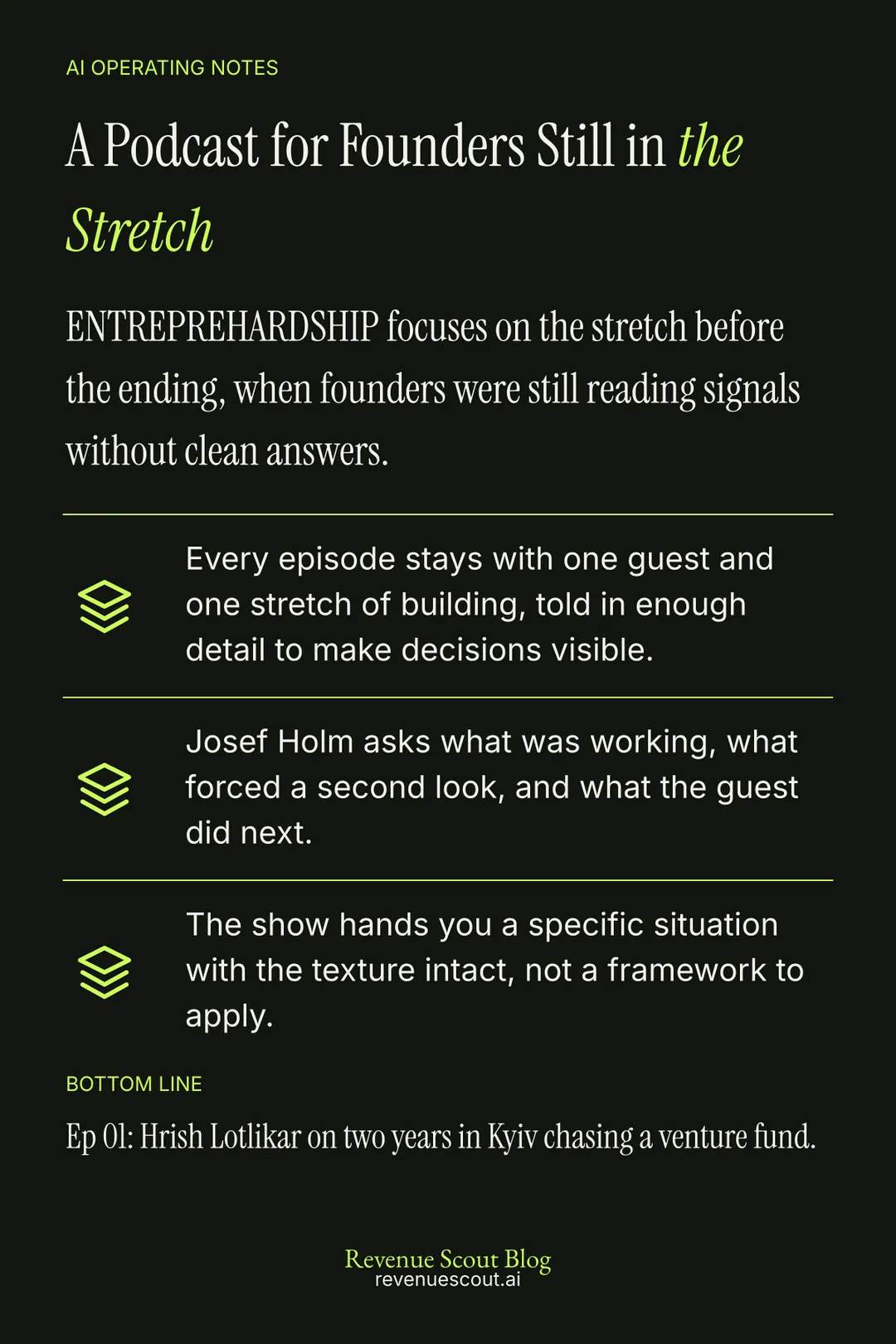
- Most founder stories get told after the outcome is known, which makes every decision look obvious in hindsight. ENTREPREHARDSHIP is built for the stretch before the ending gets smoothed over, when the founder was still reading signals without a clean answer.
- Every episode stays with one guest and one experience. No panel, no career tour, just one stretch of building told in enough detail that the decisions become visible.
- Josef Holm asks three questions in sequence: what the guest thought was working, what forced them to take another look, and what they did after that. That sequence should feel familiar to anyone building and selling at the same time.
- The show isn't trying to hand you a framework. It gives you a specific situation with the texture intact, so you can hold it next to your own and see what's similar and what isn't.
- Episode 01: Hrish Lotlikar on spending two years meeting people in Kyiv, trying to work out which conversations were moving him closer to a venture fund. Disclosure: Josef's fund invested in SuperWorld, where Hrish is co-founder and CEO.
Why this show exists
Every day, founders decide which signals to trust. A prospect says the call went well, then goes quiet. A customer keeps asking for the same change, and you have to figure out whether that one voice is telling you something about the wider market.
Most founder stories get told after the fact. The outcome is known, so the decisions look obvious in hindsight. It's easier to explain a decision once you know how it turned out.
That's the gap this show is trying to close.
Entrepreneur and investor Josef Holm started ENTREPREHARDSHIP to talk to founders about the stretch when the outcome was still unclear. It's a podcast show about the stories behind the success stories, with one guest and one experience at the centre of each conversation.
One guest. One stretch of time. A set of decisions, examined before the ending gets smoothed over.
How each conversation works
Every episode stays with one guest and one experience. No panel. No career tour. One stretch of building, told in enough detail that the decisions become visible.
What was the guest reading as signal at the time? What forced them to look again? And what did they do next? Josef asks what the guest thought was working, what forced them to take another look, and what they did after that.
Those questions do real work. The first surfaces the signals the founder was actually reading at the time, which is usually more interesting than the version they tell later. The second gets to the moment the story changed. The third is where the decision lives.
If you're building and selling at the same time, that sequence should feel familiar. You're constantly deciding which calls mean something, which objections are the market talking, and when to stop adjusting the pitch and change the product.
What founders can take from it
Why does this matter in practice? These questions matter when you're selling what you're building, changing direction, hiring people, or figuring out how long you can keep working the way you are, and the guest's experience gives listeners something concrete to compare with their own.
That last part matters most. The show isn't trying to hand you a framework. It's giving you a specific situation, with the texture intact, so you can hold it next to your own and see what's similar and what isn't.
Compare that to the usual founder interview, where the guest explains in retrospect why the thing that worked was always going to work. You can't use that. You can use someone describing what they were seeing on a Tuesday in month eighteen, when the pattern wasn't clear yet.
The first episode
What does a stretch like that actually look like? In the first episode, Hrish Lotlikar describes spending two years meeting people in Kyiv and trying to work out which conversations were moving him closer to a venture fund.
Two years of meetings is a long time to keep reading signals without a clean answer. That's the stretch the show is built for.
Disclosure: Josef's fund invested in SuperWorld, where Hrish is co-founder and CEO.
If you're in the middle of your own stretch right now, that's the conversation to start with.