
Revenue Scout Blog
When Event Organisers Find Out They Are in Debt
Key Takeaways
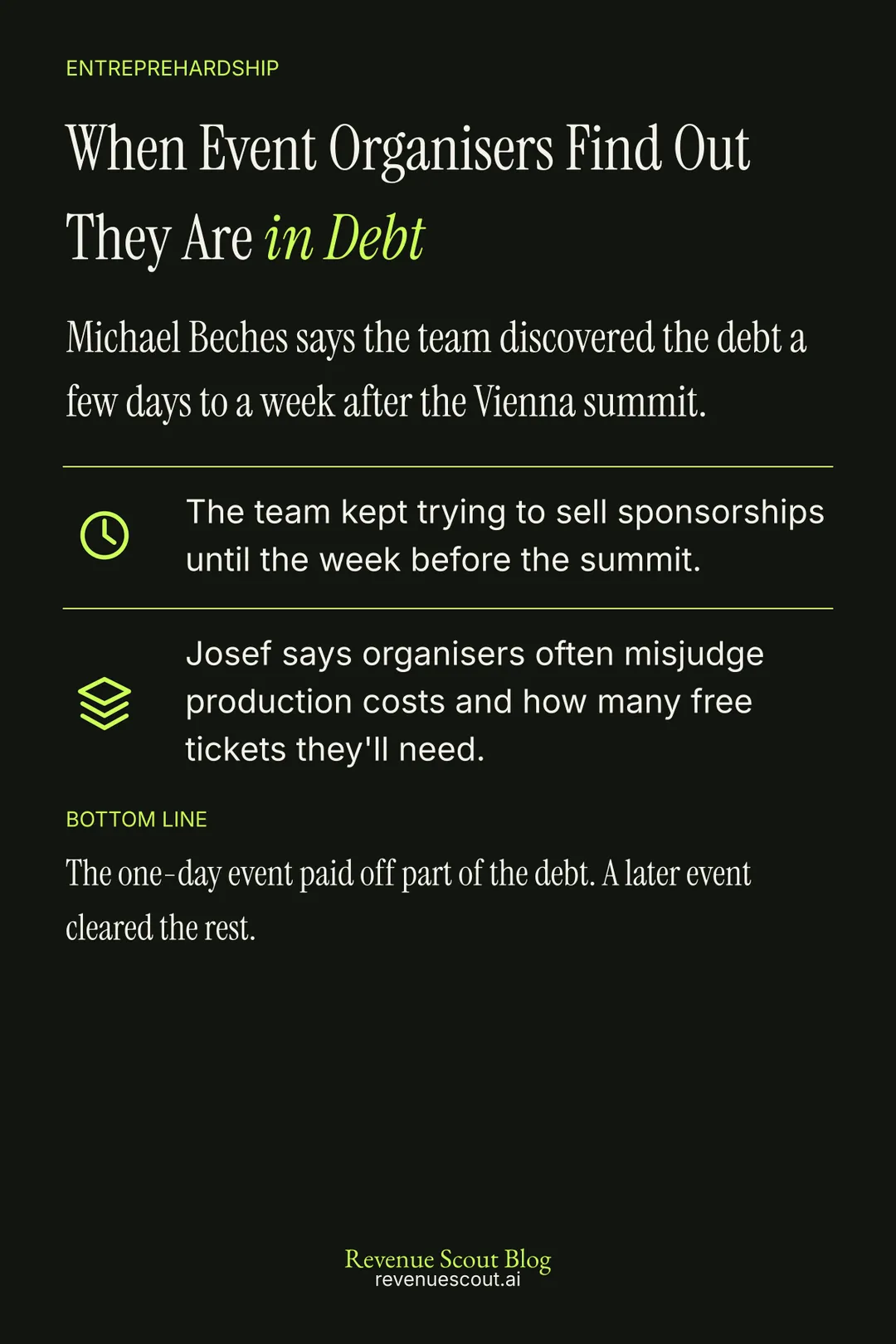
- Michael Beches says the team realised it was in debt a few days to a week after the Vienna summit, when it looked at the numbers.
- The team kept trying to sell sponsorships until the week before the event. Michael says it was hard to know how many attendees and sponsors the event would get.
- Josef Holm says organisers often misjudge production costs and how many free tickets they will need. He says sponsors covered the costs at his earlier events.
- A one-day event made the team's first profit and paid off a substantial part of the debt. A later event cleared the rest.
Michael Beches is Josef Holm's brother-in-law. On Entreprehardship, Josef asked him about the blockchain summit he helped organize in Vienna. Here are edited excerpts from their conversation.
When did the team know?
Josef (1:14): Let me ask you about the money first because that's the one part that really surprised me. When did you guys realize you had a problem?
Michael: Well, actually, you know how it is with conferences and events. Everything is last minute. You're trying to sell and to hustle until the very last minute. So you don't know at the end how many attendees will attend, how many sponsors you will get. So we really tried to sell sponsorships till the week before the event. And the day we knew that we were in debt was actually probably a few days after the event, a week after the event when we really looked at all the numbers.
What about all those tickets?
Michael (5:39): In total, it was 2,000 people from 15 nations.
Josef (6:25): Yeah, I think it's the two things that a lot of people completely misjudge when they put on an event is A how much it actually costs to put it on professionally, and B, how many free tickets you're gonna have to give away, especially in the beginning, to get people through the door. I remember too, I mean for us it was always the sponsors who covered the cost.
The next event
Michael (8:02): Exactly. So after we realized that we were in debt, we thought, okay, these big events are hard to pull off. If you can pull it off the right way, you might make a substantial amount of money, but right now we need to get out of this debt.
Michael (8:27): And we just did a one-day event. And that was actually the first time that we made profit and it didn't clear out the whole debt that we had, but a substantial amount of it.
What changed when COVID hit?
Josef (13:20): So you didn't take the whole event online because you already paid for the venue or was the reason for that?
Michael: Exactly. We already paid for the venue and we thought let's make it as interactive as possible.
Josef (16:03): So that event then dragged you guys out of debt completely.
Michael: Yeah.
Infographic
Frequently Asked Questions
- When did Michael's team learn it was in debt?
- Michael recalls that the team found out a few days to a week after the summit, when it looked at the numbers.
- What do event organisers often misjudge?
- Josef points to the cost of a professional production and how many free tickets organisers may need to give away, especially at the start.
- What covered the costs at Josef's earlier events?
- Josef remembers sponsors covering the costs at his earlier events.
- How did the team start paying off the debt?
- Michael says a one-day event made the team's first profit and paid off a substantial part of the debt.
- Why did the team keep part of a later event in person?
- Michael says they had already paid for the venue and wanted to make the event as interactive as possible.
- How many people attended the Vienna summit?
- Michael says 2,000 people from 15 nations attended.